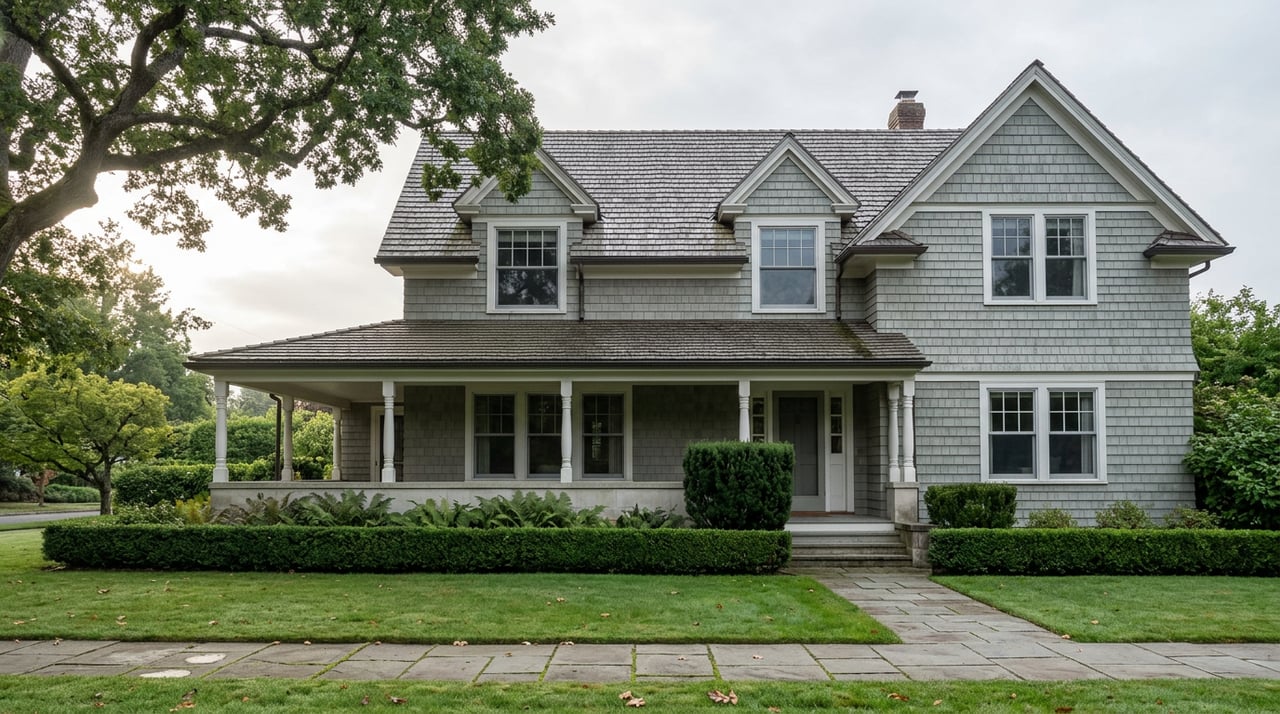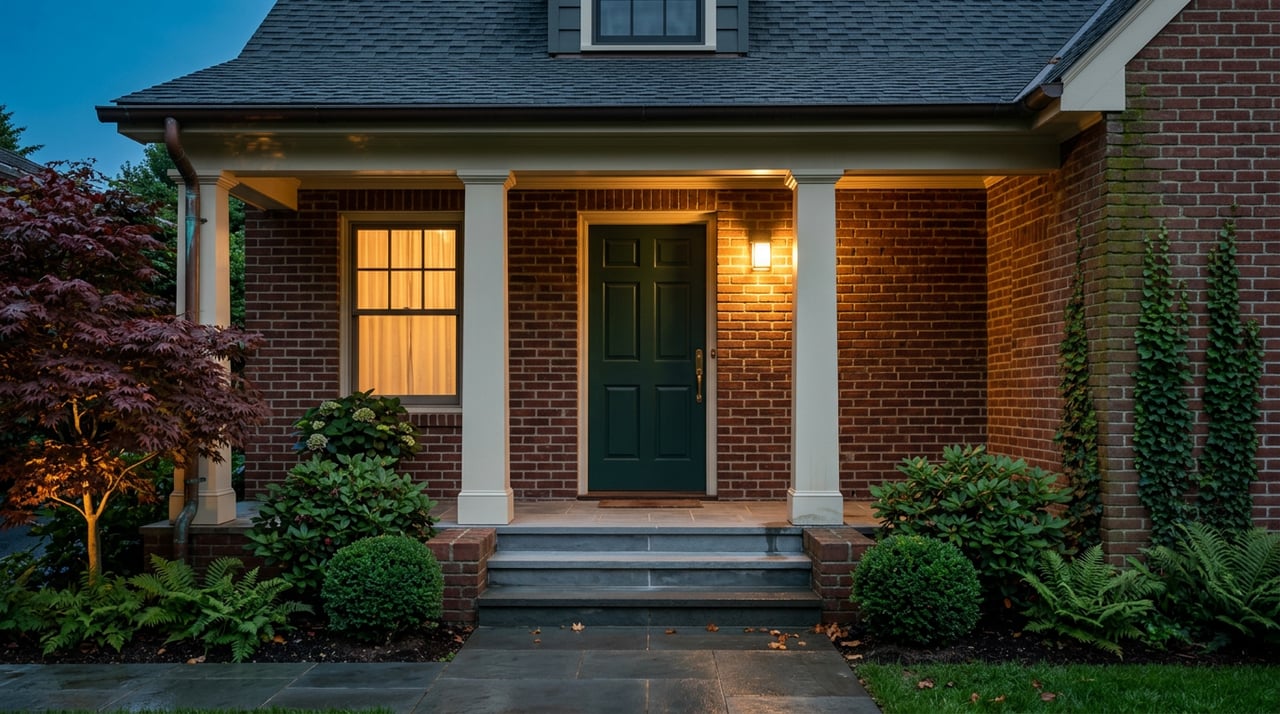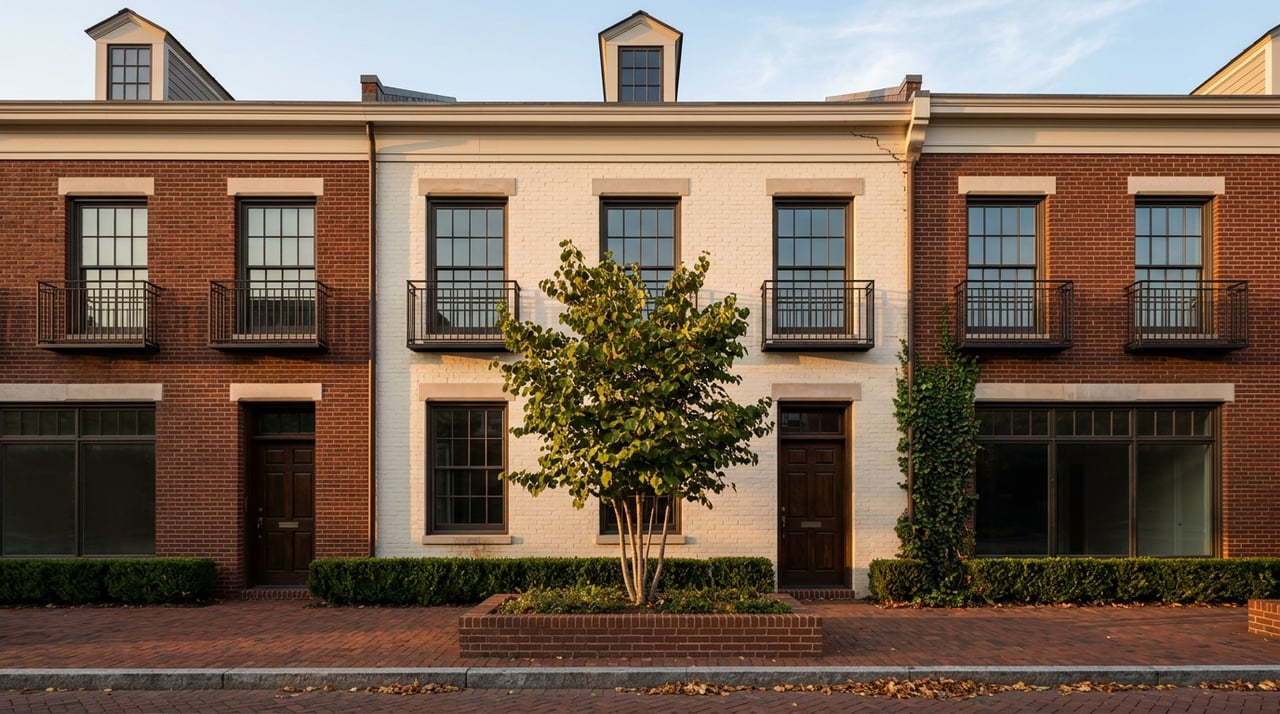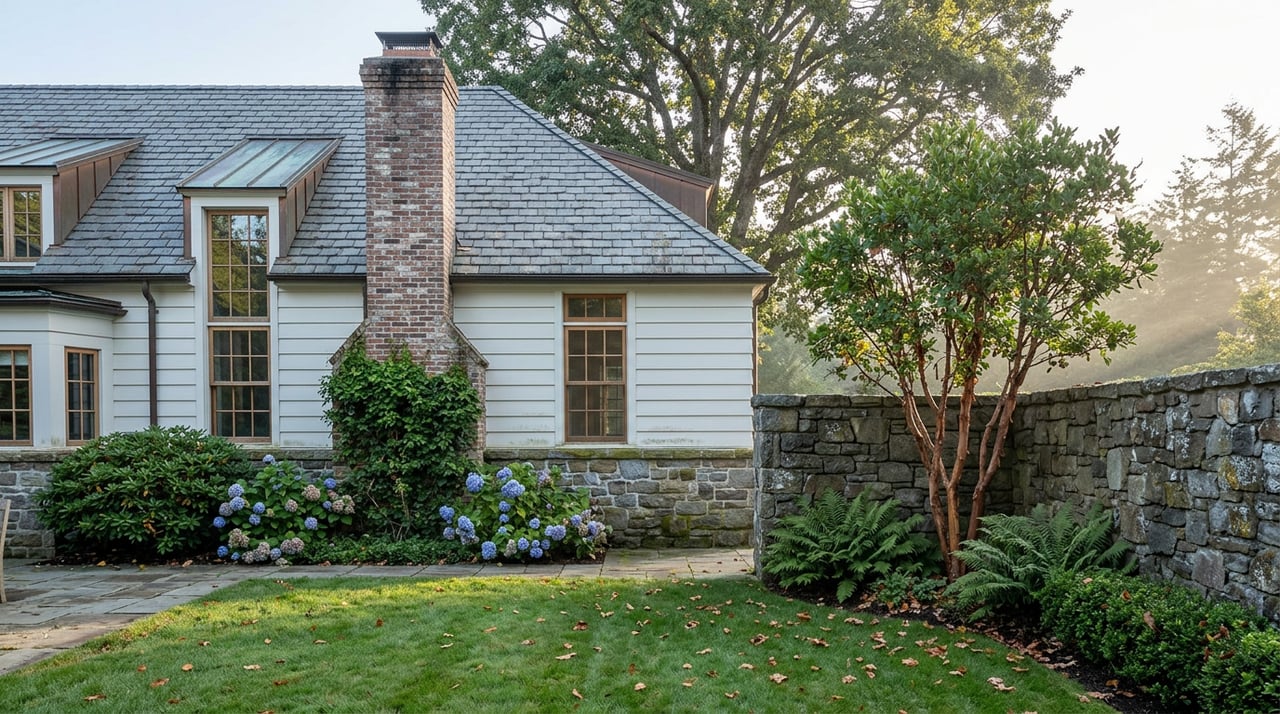
Two houses. Same size, same era, same price range, both listed as "single-family" on a quiet Saanich street. On paper they read as identical products. Under the zoning bylaw, they might not be even close.
That gap is not hypothetical anymore. As of March 23, 2026, Saanich's own Housing Strategy Progress Report told council something that would have been unthinkable two years earlier: building permits for the Houseplex form of small-scale multi-unit housing went from just 4 in 2024 to 99 in 2025. Total units that received occupancy permits jumped 63 percent over the same stretch, from 356 to 582. That is not a rounding error. That is a district where the legal ceiling on a "single-family" lot moved, and the market is only now catching up to what that means.
If you are comparing Saanich against Oak Bay, Victoria, or North Saanich using the median price alone, you are missing the part of the story that a portal search will never show you: whether the specific lot you're looking at carries the right to become something other than one house.
What Actually Changed on June 30, 2024
Saanich's zoning bylaw amendments for Small-Scale Multi-Unit Housing took effect on that date, part of a province-wide mandate that required municipalities across British Columbia to allow three, four, or six units on lots that used to be restricted to a single detached home or a duplex. The mechanism Saanich uses is called a Houseplex, defined under Schedule G of the zoning bylaw as a residential building containing two or more self-contained primary dwelling units. A duplex, a triplex, and a fourplex all qualify. So do rowhouses, in some configurations.
The detail that trips people up: a single-family home with a basement suite is not a houseplex. To count, both units have to be primary dwellings, not a principal home with an accessory suite tacked on. And secondary suites still count toward the total unit cap, so a duplex where each side also has a secondary suite is treated as four units under the bylaw, not two.
None of this required a rezoning application or a public hearing for most projects. Parcels with four units or fewer are typically exempt from the Form and Character Development Permit that used to slow projects down, which is a large part of why the permit count could jump the way it did between 2024 and 2025.
Four Permits Became Ninety-Nine. Here's the Texture Behind That Number.
A Times Colonist story from September 2025 gave the district's planning director, Lindsay Chase, the chance to put real detail on the trend while it was still building: at that point Saanich had 75 pending SSMUH building permit applications, broken down as 40 duplexes, 8 triplexes, 27 fourplexes, and a single sixplex application. The story ran alongside a photo of a fourplex already under construction on the 1500 block of Ash Road, a project that stood as one of the earliest visible examples of a single-family lot becoming four homes under the new rules.
That kind of language is starting to show up on the market side too. It is not unusual anymore to see Saanich listing descriptions that flag SSMUH potential directly, phrases like "may be well-suited for a duplex or fourplex, buyer to verify with the municipality," attached to a lot that would have been marketed purely on square footage and finishes a few years back. The zoning capacity has become part of the pitch.
The Boundary Nobody Puts on the Listing Sheet
Here is where the comparison gets genuinely useful, because the right to build a houseplex is not universal across Saanich, and it is not universal across Greater Victoria either.
To qualify for SSMUH in Saanich, a lot has to sit inside the Urban Containment Boundary and within the sewer service area. Roughly half the district's land base falls outside that line, held in rural residential and agricultural use specifically to prevent the kind of infill SSMUH enables everywhere else. If a property sits outside the boundary, the new density rules simply do not apply to it, regardless of lot size or price.
The transit rules add a second layer, and it cuts in a direction most buyers do not expect. Lots within roughly 400 metres of frequent bus service, defined as service every 15 minutes or better during set hours, can qualify for the higher six-unit tier. But Saanich has also designated three Transit-Oriented Areas, at the Royal Oak Exchange, Uptown, and around UVic, where SSMUH is not permitted at all. That is not an oversight. Those areas are already zoned for taller, denser buildings under separate provincial rules, so the small-scale houseplex framework does not apply there. According to Saanich's own published FAQ, even a high-frequency route like the one running along Quadra Street has not automatically qualified adjacent lots for the six-unit tier. Staff have said they are still working with BC Transit to confirm which routes meet the province's technical definition of frequent service.
Put plainly: proximity to good transit can either raise your unit cap or eliminate SSMUH eligibility entirely, depending on exactly which kind of transit zone the lot falls into. That is not something a median price captures.
| Location type | What's allowed | Where you'll see it |
|---|---|---|
| Inside the Urban Containment Boundary, standard lot over 280 square metres | 3 to 4 units by right, no rezoning | Most established Saanich residential streets |
| Inside the boundary, within a Regular Transit Area | Up to 6 units by right | Corridors near frequent bus service |
| Inside a Transit-Oriented Area, such as Royal Oak Exchange, Uptown, or UVic | SSMUH not permitted; separate higher-density zoning applies instead | Areas already planned for taller buildings |
| Outside the Urban Containment Boundary | SSMUH does not apply | Rural Saanich acreages |
North Saanich makes the comparison sharper, and for a more particular reason than simple exemption. The provincial rule technically reaches North Saanich too, but a district advisory report on North Saanich's own housing file found its zoning bylaw update was still overdue past a December 31, 2025 deadline, and that its Urban Containment Boundary is drawn narrow enough that SSMUH mostly cannot extend past a secondary suite under the district's current lines. Widening that boundary is not a local council vote. Under Capital Regional District rules, it counts as a major amendment to the regional growth strategy, which needs unanimous support from all 13 municipal councils in the district. So if you are weighing a large North Saanich lot against a similar-sized Saanich lot inside the boundary, you are not just comparing acreage and price. You are comparing a property where multi-unit rights remain a live, unresolved question against one where they were largely settled back in 2024.
What This Looks Like When It Isn't Quiet
The Houseplex path is the gentle end of this story, one house becoming three or four without a public hearing. The other end looks completely different, and Saanich has been approving it at the same time.
On March 18, 2026, council cleared the way for a six-storey, 60-unit condo building at the corner of McKenzie Avenue and Saanich Road, replacing three single-family homes and removing 28 trees, including 18 Garry oaks. Mayor Dean Murdock called the tree loss "truly regrettable," and Councillor Karen Harper argued the site, sitting directly on a transit artery, was exactly where that kind of housing needed to go. A few blocks away, council endorsed a 104-unit rental building on Quadra Street on August 20, 2026, one of the first projects considered under the newly adopted Quadra McKenzie Plan's Four Corners Village framework, developed by Abstract Developments.
These are formal rezonings, not by-right houseplex conversions, and they follow a different approval track entirely. But they tell you something the permit numbers alone do not: the corridors getting this kind of attention are the ones where the district wants density concentrated, which in turn tells you where the quieter Houseplex activity is likely to keep clustering nearby.
Permission Isn't the Same as Construction
It would be easy to read all of this as a straight line where more zoning capacity equals higher land value, full stop. The people running Saanich's council do not see it that way, and their pushback is worth sitting with.
In February 2026, councillors Judy Brownoff and Susan Brice moved to ask the province to remove Saanich's provincially assigned housing targets altogether, arguing the targets were set in 2023 under market conditions that no longer hold.
"Saanich can approve as many applications as we want, but it doesn't translate into a developer getting a building permit or even starting a building," Brownoff said. "It's all based on the economy at the time."
At that point, Saanich had delivered occupancy permits for 810 net new homes against a provincial target of 1,041, on its way to a 2028 target of 4,610. The district's historical average between 2015 and 2024 was 448 new units a year. The zoning right to build four units on a lot is real. Whether that right gets exercised depends on financing, construction costs, and a developer's appetite for risk, none of which show up in a zoning map.
What This Means If You're Comparing Neighbourhoods
If you're weighing a Saanich purchase against Oak Bay, Victoria, or the Peninsula, the median price tells you what things cost. It does not tell you what a specific lot is legally allowed to become. Two questions are worth asking before you get attached to a number: is the lot inside the Urban Containment Boundary and the sewer service area, and does it sit inside, near, or outside a Transit-Oriented Area. The answer changes whether you're buying a house or buying a house with options attached to it, and that distinction can matter as much to a seller's future asking price as it does to a buyer's plans today.
If you're trying to work out what a specific Saanich property is actually worth, given all of this, that's exactly the kind of question Coastal Living Collective sits down with clients to answer street by street. What's Your Property Worth?
Frequently Asked Questions
Does this mean every single-family home in Saanich can legally become a fourplex? Not automatically. Eligibility depends on the lot sitting inside the Urban Containment Boundary and the sewer service area, plus meeting minimum lot size and other requirements under Schedule G. A property outside the boundary, or inside a Transit-Oriented Area like Uptown or UVic, does not qualify the same way.
Is a Houseplex the same thing as a rezoning? No. That's the point of the SSMUH framework. Projects of four units or fewer generally proceed through a building permit rather than a rezoning application or public hearing, which is a large part of why permit activity was able to jump so quickly between 2024 and 2025.
Does North Saanich have the same rules? Not in practice, and the reason is more particular than a simple exemption. SSMUH applies province-wide, but a district advisory report on North Saanich's housing file found its own zoning bylaw update was still overdue past a December 31, 2025 deadline, and that its Urban Containment Boundary is too narrow for most residential land in the district to qualify for anything beyond a secondary suite. Expanding that boundary requires unanimous agreement from all 13 municipal councils in the Capital Regional District, a far higher bar than the process Saanich used to bring its own bylaw into effect in 2024.